

By Kathryn Cooper
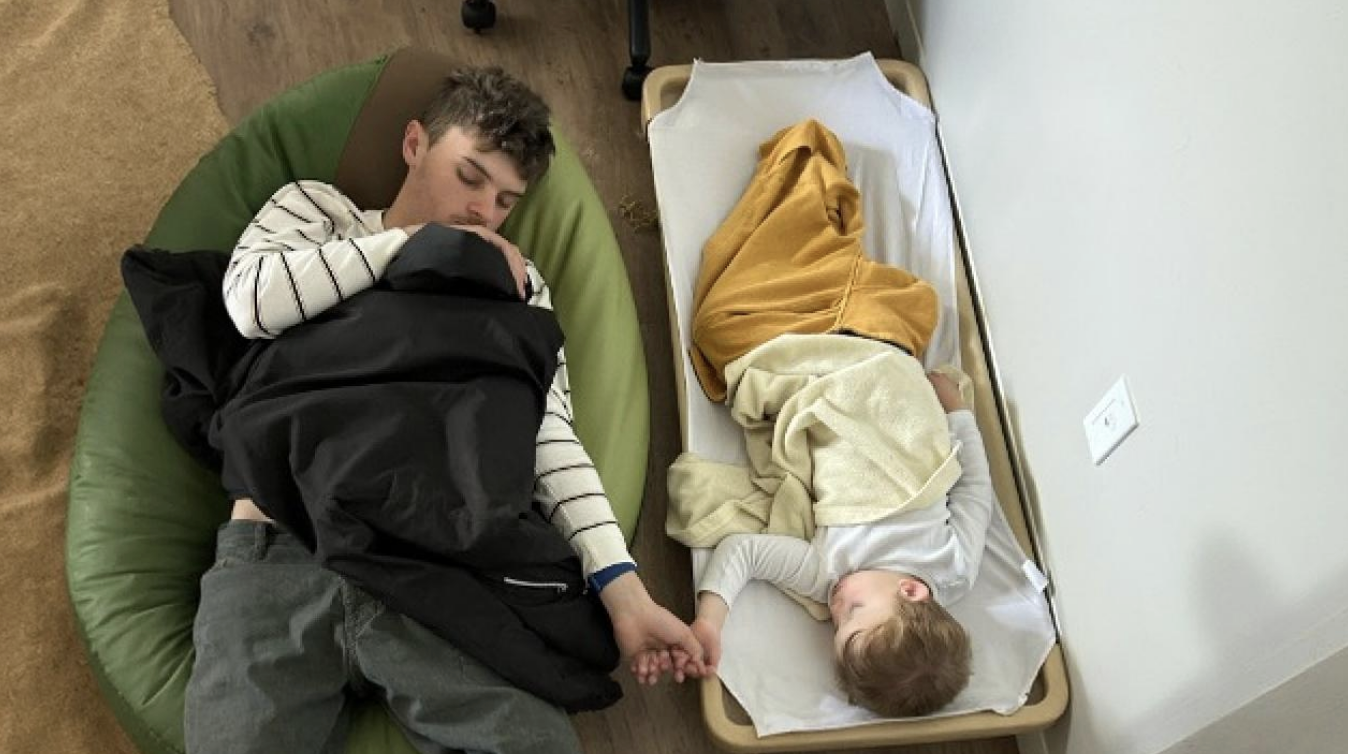
Early childhood education is often described as a relational profession. Relationships with children, families, and colleagues shape not only what we do, but how we do it. And yet, within this deeply relational work, educators hold a wide range of beliefs about professional boundaries. How much of ourselves do we bring? What do we keep separate? Where does professionalism begin and end? Recently, a conversation with a colleague prompted me to pause and wonder how these boundaries show up in practice, and what they might mean for connection, sustainability, and well-being in our field.
That conversation stayed with me because it reflected a tension I have seen many times in early learning settings. An educator shared that she keeps her work and personal life entirely separate. This boundary felt important to her, perhaps protective, perhaps necessary. Early childhood work is emotionally full, and the relational demands are constant and often invisible. For educators who are introverted, socially drained, or already carrying a full emotional load, separation can feel like survival.
At the same time, I noticed that this firm separation sometimes made it difficult to build relationships with children, families, and colleagues. Conversations remained largely transactional. Moments of connection were brief or carefully contained. Families sensed a distance they could not always name. I found myself wondering:
- What is the minimum level of relational engagement this work requires? And
- How do we support educators to meet that expectation in ways that honour both professional responsibility and personal capacity?
I have also witnessed the opposite end of the spectrum. Educators who are open, familiar, and deeply invested in their relationships with families and colleagues. These educators celebrate milestones alongside parents, support children through family transitions, and share parts of their own lives in ways that feel natural and connective. Their warmth often creates a strong sense of belonging and trust.
And yet, there is tension here too. When boundaries become porous, oversharing can occur. Roles may blur. Emotional labour can quietly accumulate. Families may begin to rely on educators in ways that extend beyond professional responsibility, and colleagues may feel uncertain about expectations or boundaries. In a helping profession, boundaries are not about distance. They are about clarity, care, and ethical responsibility.
Both experiences led me back to the same question: What does professionalism look like in a field that is, by its very nature, deeply relational?
Professional boundaries are often discussed, when they are discussed at all, in terms of limits. What not to share. Where not to step. Which lines not to cross. These conversations can feel restrictive or corrective rather than supportive. Yet in a profession that depends on trust, presence, and connection, boundaries cannot simply be about holding back. They also need to help us understand how to show up well.
Perhaps professional boundaries in early childhood are less about separation and more about containment. They invite us to consider who the relationship is for, what purpose it serves, and how our presence impacts others. They help us ask:
- What does this child need from me at this moment?
- What supports trust and safety?
- What protects dignity, theirs and mine?
When viewed this way, boundaries are not the opposite of connection. They are what make connections possible over time.
This perspective also invites us to rethink what “being relational” means. Deep connection does not require personal disclosure, emotional exposure, or the sharing of private experiences. It can be built through consistency, attunement, reliability, and respectful communication. Children, in particular, often feel safest with adults who are warm, predictable, and boundaried. Adults who are present without being overwhelming.
These questions are not abstract. They show up in everyday moments, during drop-off conversations, team meetings, family partnerships, and the quiet decisions educators make about how much of themselves to bring into the work. Without shared language or space for reflection, many educators move between emotional distance and over-giving, often unsure how to navigate the space in between.
I keep returning to a grounding idea that helps anchor this tension:
We build deep connection in service of the child, not in service of ourselves.
This idea does not offer a checklist or a set of rules. Instead, it invites ongoing reflection. It asks us to consider our intentions, our capacity, and the impact of our choices. It reminds us that professionalism in early childhood is not a fixed point, but a practice shaped by context, relationship, and care.
Perhaps the question is not whether boundaries belong in a relational profession, but how we understand and practise them. Perhaps professionalism is not about choosing distance or closeness, but about learning how to move thoughtfully between the two. And perhaps sustainability in our field depends less on finding the “right” boundary and more on creating space to reflect, name tensions, and support one another in holding them.
Author Reflection
As someone who values connection deeply, I continue to sit with my own questions about boundaries in this work. I have felt the pull to protect my energy through distance, and I have also experienced moments where care has edged into over-giving. What I am learning is that boundaries are not fixed rules, but living practices shaped by context, relationship, and reflection.
I am increasingly curious about how professionalism in early childhood can hold both warmth and restraint, presence and protection. When we attend to our own well-being, reflect on our intentions, and remain grounded in the purpose of our relationships, boundaries become less about limitation and more about ethical care for children, families, colleagues, and ourselves.
A Question for the Field
How might we, as a profession, continue to deepen our understanding of professional boundaries, not as rigid lines or personal traits, but as reflective practices that sustain relationships, uphold dignity, and support educator well-being over time?
Author Bio
Kathryn Cooper is an early childhood educator, leader, and reflective practitioner based in Alberta with over 25 years of experience in early learning and care. She currently serves on the Board of Directors of the Association of Early Childhood Educators of Alberta (AECEA) and is deeply interested in relational practice, professional ethics, educator well-being, and sustainable leadership in the sector.